Using the gel electrophoresis device, I found the simple concept not so simple. This was using Agarose gel analysis. Agarose with a direct current, is the most commonly used method for analyzing DNA fragments between 0.1 and 25 kb, while pulse-field gel electrophoresis enables analysis of DNA fragments up to 10,000 kb. Our experiment used 100 volts Dc.
My questions. If the DNA simply moved towards one of the charged sides, why doesn’t the DNA move all the way through the gel? Large DNA molecules do not work in electrophoresis depending on the gel type. Specific gels can allow larger dna and can be used for larger dna sorting
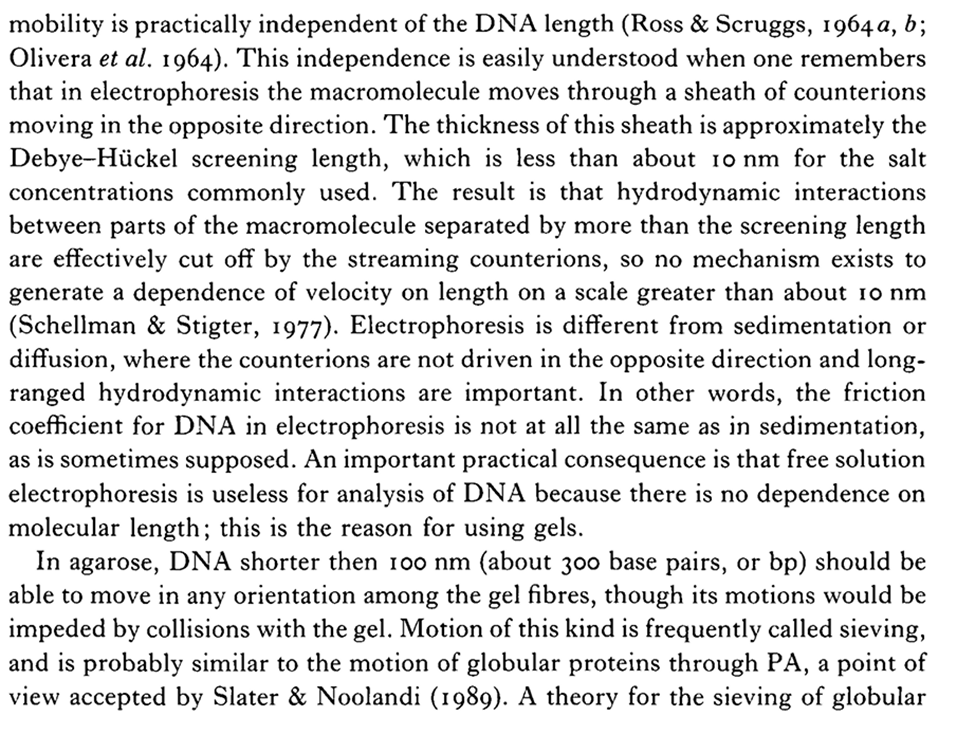
My big mystery, why do molecules get stuck? Counterions are moving in the opposite direction of the flow of dna. Eventually a balance is struck, the molecules stop, they can’t move forward anymore and the counterion force (and something else?) is holding them from moving.
My theory is that counterion flow must begin to make channels in the gel. I see theory from others that the DNA strands or macromolecules are being snaked through the gel, perhaps weaving through the gel fibers. That process could be making channels in the gel. Also channels in the gel could be made simply by counterion flow. These channels are the center of my theory.
My theory is based on channels happening in the gel, and it is that the channels in the gel are less intense near the electrode the molecules are moving away from, and near the electrode the molecules are moving towards, intense channels (high flow) of counterions move and prevent anything except the smallest molecules from migrating. Once a channel is made, the flow (of counterions) has less pressure, just like in a river where the smaller the river channel, the faster the flow.
- How the molecules stop: The counterions flow is higher pressure than the friction of something in the gel. And the closer you get to the electrode, the counterions flow is intense and stops the material because of molecular friction, or simply blockages can hold the molecules from moving against the flow of counterions. Meaning not enough channels have been formed.
- Why the molecules move: When the molecules are moving, the blockages are simply pulled/pushed away, and the molecules move through the gel because of the molecular force trying to move the molecule, and the counterion flow is insufficient to hold the molecules back. And more channels start to appear, allowing even more flow of the molecules.
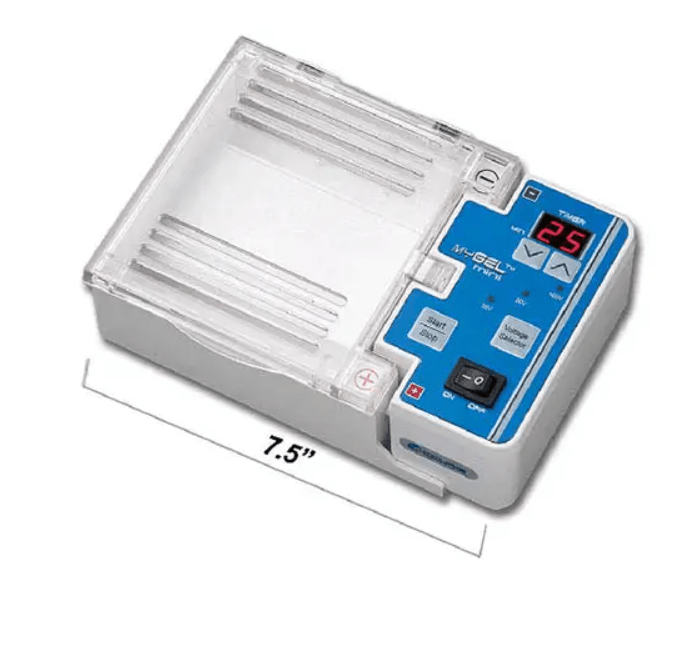
You can put many different organic molecules in the gel and they will get sorted by size. A really neat machine! Below is the machine used for this experiment:
Below snip of Bruno Zimm document on electrophoresis, discussing counterions:
References:
Pulse-field gel
DNA analysis using analytical gels
DNA questions re counterion flow, Bruno Zimm document:
problems_and_prospects_in_the_theory_of_gel_electrophoresis_of_dna.pdf
Next learning is pcr, polymerase chain reaction. Using the famous
opyright 2026 Rod Deluhery
bacteria from Yellowstone national park, yellowstone geyser polymerase pcr.
yellowstone geyser polymerase pcr +9 Thermus aquaticus ((Taq)), a bacterium discovered in Yellowstone’s Mushroom Spring in 1966 by Thomas Brock

+9
Thermus aquaticus (\(Taq\)), a bacterium discovered in Yellowstone’s Mushroom Spring in 1966 by Thomas Brock

